
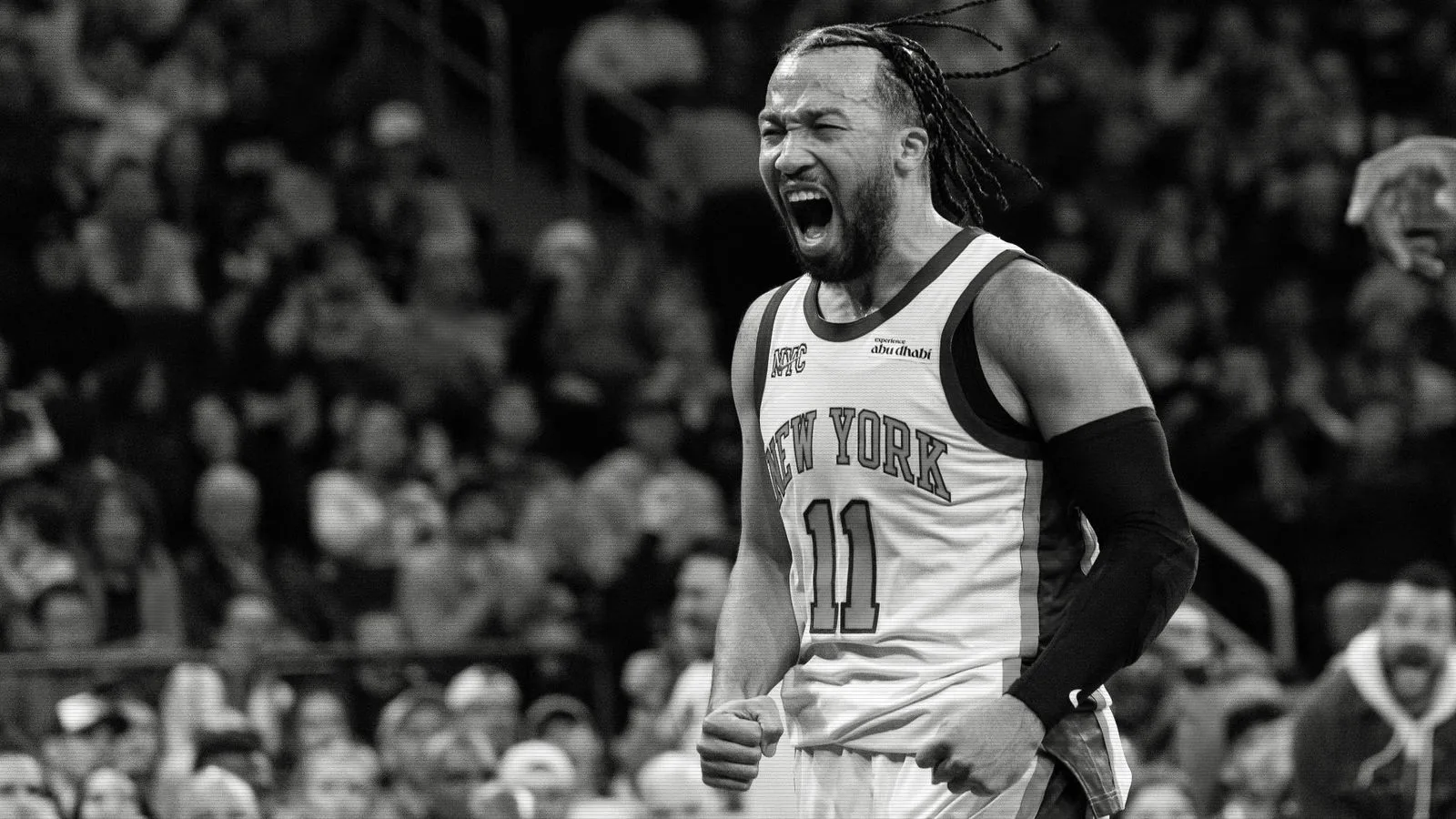
Jalen Brunson wasn't supposed to have much more room to grow.
In 2018, the Villanova standout entered the NBA draft with two national championships and an impressive college résumé. But questions about his size and athleticism followed him. Bleacher Report projected him as a "high-end backup," suggesting his physical limitations would restrict his ceiling.
Four seasons later, Brunson had already exceeded those expectations. The former second-round pick had developed into a dependable starter, helped Dallas reach the Western Conference Finals and earned himself a nine-figure contract.
The new verdict seemed fairly straightforward: Brunson was good. Really good, even.
But what if even that was selling him short?
Eight seasons into his NBA career, Brunson has surpassed 11,000 regular-season points and established himself as one of the league's premier scorers.
But the most remarkable part of his career isn't necessarily where he ended up. It's how dramatically his trajectory changed after four seasons of relatively modest production.
Brunson's fifth-season scoring jump ranks among the 10 largest by players moving from their fourth to fifth year since 1999.
And that breakout was only the beginning.
Brunson's early career was hardly unsuccessful. Playing alongside Luka Dončić in Dallas, he gradually earned more responsibility, increasing his scoring average from 9.3 points per game as a rookie to 16.3 in 2021-22.
His productivity improved, too. Brunson averaged 15.3 points per 36 minutes in his first season and 18.3 by his fourth.
It was steady progress, but hardly an indication of what came next.
In the summer of 2022, Brunson signed with the New York Knicks, stepping out of Dončić's shadow and into a much larger offensive role.
His scoring average jumped from 16.3 to 24.0 points per game in his first season with New York, an increase of 47.2%.
But the more revealing statistic wasn't how much more Brunson scored. It was how much more he scored without a comparable increase in playing time.
His minutes increased just 9.7%, from 31.9 to 35.0 per game. His scoring per 36 minutes, meanwhile, jumped 35%, from 18.3 to 24.7.
And despite attempting substantially more shots, his true shooting percentage actually improved slightly, from 58.32% to 59.71%.
Brunson wasn't simply benefiting from more minutes. He was becoming a more productive scorer within them.
| # | Season | PPG |
|---|---|---|
| 1 | 2019 | 9.3 |
| 2 | 2020 | 8.2 |
| 3 | 2021 | 12.6 |
| 4 | 2022 | 16.3 |
| 5 | 2023 | 24.0 |
| 6 | 2024 | 28.7 |
| 7 | 2025 | 26.0 |
| 8 | 2026 | 26.0 |
Brunson's breakout was impressive on its own. Historically, it was even more unusual.
His 7.7-point increase from his fourth to fifth season ranked 10th among qualifying players with a minimum of 40 games played in both seasons since 1999.
Only nine players in the analysis recorded larger improvements, including Coby White, Terry Rozier and Jermaine O'Neal. Brunson's increase even exceeded those of Kobe Bryant, Steve Nash and Shai Gilgeous-Alexander at the same stage of their careers.
Of course, a dramatic scoring increase doesn't necessarily make someone a superstar. And a single breakout season doesn't guarantee lasting success.
But Brunson wasn't finished.
In 2023-24, his scoring average climbed again, reaching a career-high 28.7 points per game. He followed that with consecutive seasons averaging approximately 26 points, establishing a level of production that would have seemed unlikely just a few years earlier.
What began as a fifth-season breakout had become the new standard.
Brunson himself has suggested that his development wasn't simply a matter of finding the right opportunity.
In a 2022 interview with Bleacher Report, when asked whether his improvement was the result of opportunity or personal growth, he answered, "I think it's been both."
It's a distinction worth making. New York gave Brunson a larger role, but the numbers suggest he was doing more than taking advantage of additional minutes. His scoring productivity improved substantially, even as his responsibilities increased.
And perhaps that's what makes his career so difficult to predict. Four seasons provided plenty of evidence of what Brunson could do, but not necessarily what he could become.
The question that followed Brunson into the 2018 draft was how good he could be.
As it turns out, the answer required a little more patience.
And maybe a higher ceiling.